Good study habits are small things you do every time you study that make learning stick: testing yourself instead of rereading, spreading sessions out instead of cramming, studying in short focused blocks without your phone, and planning the week ahead. None of them needs talent. They need repetition until they run on autopilot.
Below are twelve habits that research and experience both support, with the reason each one works and a way to start it this week. You do not need all twelve. Pick two or three, practise them for a month, then add more.
A good study habit does one of three things:
- It makes you retrieve information from memory, which is how memories get stronger.
- It spaces your learning out over time, so you review just before you forget.
- It protects your attention, so the time you spend actually counts.
A major review of learning techniques (Dunlosky and colleagues, 2013) found that self-testing and spreading practice over time were the most useful methods, while rereading and highlighting helped little. Most "bad" habits feel productive but skip all three.
1. Test yourself instead of rereading
Why it works: pulling an answer out of your memory strengthens it far more than seeing it again. This is active recall.
Start this week: after each class, close your notes and write three questions about what you just learned. Answer them the next day without looking. See how to do active recall for more formats.
2. Spread your study out
Why it works: reviewing a topic over several days beats the same total time in one block. Forgetting a little between sessions makes each review do more work. This is spaced repetition.
Start this week: when you learn something new, schedule a quick review for one day, three days and one week later.
3. Study at the same time every day
Why it works: a fixed time removes the daily decision of whether to study. Once it is part of your day, it takes less willpower.
Start this week: pick one 45-minute slot you can keep five days a week, like right after dinner. Our page on how to build a study routine walks through it.
4. Work in focused blocks with breaks
Why it works: attention fades over long sessions. Short blocks with planned breaks keep quality high. The Pomodoro technique is the best-known version: 25 minutes on, 5 off.
Start this week: try 25/5 for three rounds. If that feels too short, move to 45/10.
5. Put your phone in another room
Why it works: even a silent phone face down on the desk can pull at your attention. Distance removes the temptation entirely.
Start this week: phone in another room for your first block of the day. If you struggle to focus anyway, read how to focus on studying.
6. Plan your week on Sunday
Why it works: a plan turns "I should study" into "Tuesday, 7 pm, chemistry chapter 4 questions". Specific plans are much easier to follow.
Start this week: spend 15 minutes on Sunday listing deadlines and tests, then assign topics to your study slots. A study plan template gives you a ready layout.
7. Set a goal for every session
Why it works: "study biology" has no finish line. "Answer all 15 end-of-chapter questions" does. Clear goals cut wasted time.
Start this week: write one concrete goal at the top of the page before you start each session.
8. Start with the hardest subject
Why it works: your focus is usually best at the start of a session. Use it on the topic that needs it most, not on the one you enjoy.
Start this week: rank today's tasks by difficulty and do the top one first.
9. Mix topics and problem types
Why it works: practising different types of problems together trains you to choose the right method, which is what tests demand. This is called interleaving.
Start this week: in math or science, mix problems from the last three chapters instead of doing one chapter at a time.
10. Explain it in your own words
Why it works: explaining forces you to connect ideas and shows you exactly where your understanding breaks.
Start this week: after a session, explain the main idea out loud in two minutes as if to a younger student.
11. Review your notes within 24 hours
Why it works: much of what you hear in class fades within a day if you do nothing with it. A short review the same day keeps far more of it.
Start this week: spend ten minutes each evening turning that day's notes into questions.
12. Protect your sleep
Why it works: sleep is when your brain stores what you learned. Cutting it to study more often means remembering less.
Start this week: set a fixed lights-out time on school nights and stop studying 30 minutes before it.
| Bad habit | Why it fails | Do this instead |
|---|
| Rereading notes | Feels familiar, tests nothing | Close the notes and quiz yourself |
| Highlighting everything | Marking is not learning | Write questions in the margin |
| Cramming the night before | Fades fast, wrecks sleep | Short reviews spread over the week |
| Multitasking with messages | Every switch costs focus | Phone in another room |
| Studying only what you like | Weak topics stay weak | Start with the hardest topic |
| Long sessions with no breaks | Attention drops after a while | 25 to 50 minute blocks |
| Waiting for motivation | It rarely arrives on its own | A fixed time and a tiny first step |
If putting things off is your main problem, start with how to stop procrastinating before anything else.
Knowing good habits is easy. Keeping them is the hard part. A few things help:
- Start smaller than you think. Ten minutes a day you actually do beats an hour you skip.
- Attach it to something you already do. "After I get home and eat, I open my flashcards."
- Make it obvious. Leave your notes on the desk, open to tomorrow's topic.
- Track it. A simple tick on a calendar for every day you study gives you a streak to protect.
- Never miss twice. Missing one day is normal. Missing two starts a new habit of not studying.
Expect a new habit to take weeks, not days, before it feels automatic. Studies of habit formation report a wide range, often two months or more, so do not give up after the first week.
The habits are the same, but the setting changes.
In high school, your timetable is fixed and teachers check homework, so the main job is to add self-testing and spaced review on top of what is assigned.
In college, you might have only a few hours of class a day and no one checking until the midterm. The habits that matter most are planning your week, studying at a fixed time, and reviewing lectures within a day. A common rule of thumb is two to three hours of study for every hour in class, though it varies a lot by course.
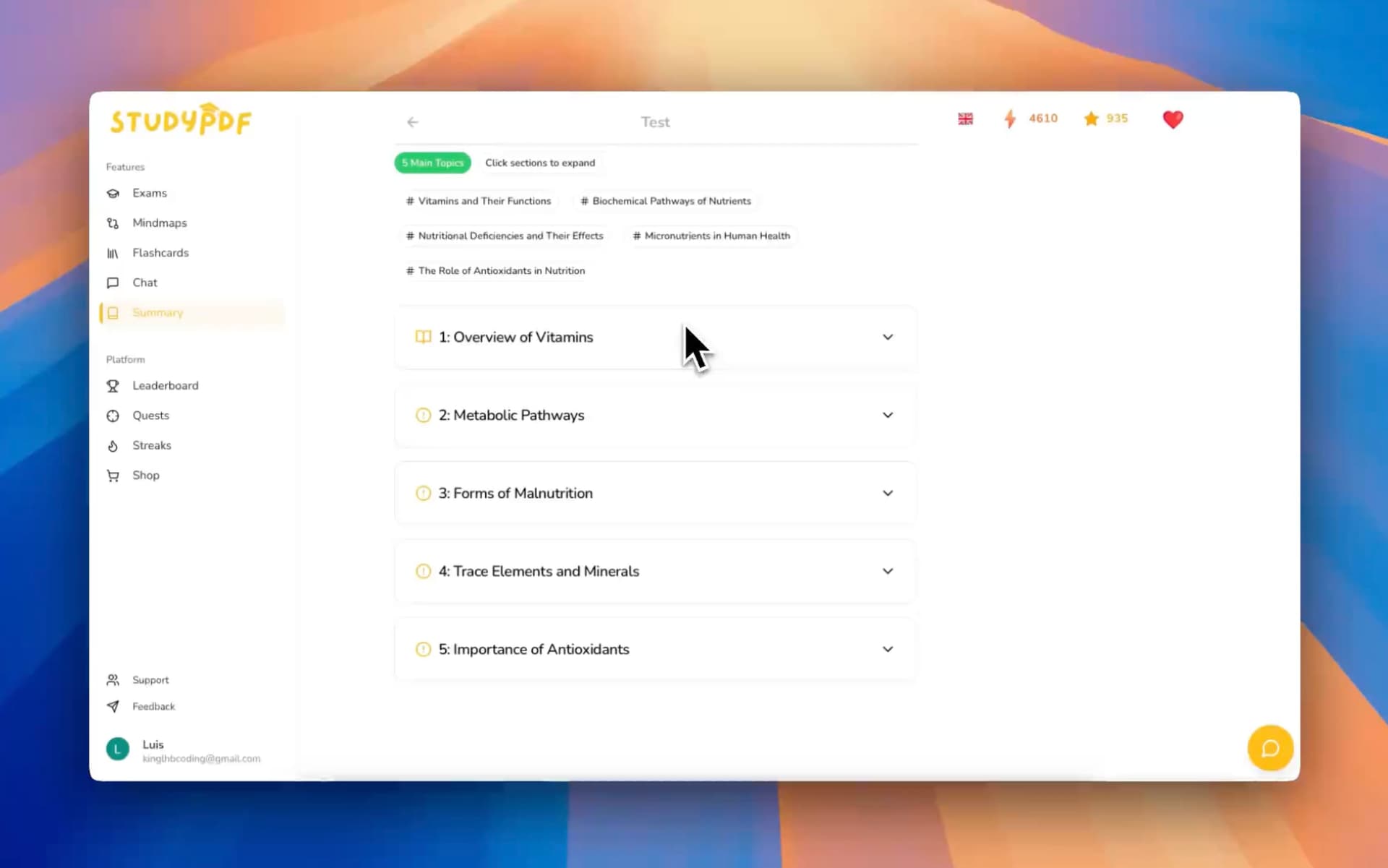
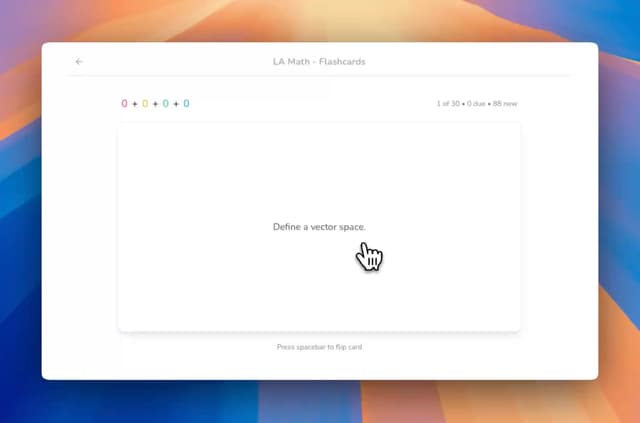
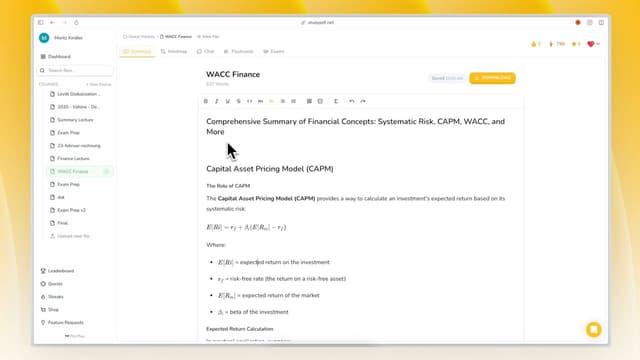
StudyPDF is one tool that can take some setup work off your plate. You upload your own class materials, such as slides, notes, readings or photos of handouts, and it turns them into quizzes, flashcards and practice exams. That makes habit 1 and habit 11 quicker: the questions are ready, so you can spend your time answering them.
The Plan tab helps with habits 2 and 6. You enter your exam date, how many hours you can study and on which days, and it builds dated sessions up to the test, putting your weakest topics first and bringing them back again. Streaks help you keep going day to day. The free plan covers about four materials a week. You can try it with a study plan from your own notes.
What are the most important study habits?
Testing yourself instead of rereading, spreading study over several days, studying at a fixed time without your phone, and getting enough sleep. If you only change one thing, start self-testing.
How long does it take to build a study habit?
Usually several weeks, often around two months or more for it to feel automatic. Start small and keep it going even on busy days with a five-minute version.
How many hours a day should a student study?
It depends on your level and courses. For high school students, one to two focused hours on school days is a reasonable start. College students often aim for two to three hours per class hour each week.
What is the difference between study habits and study skills?
Study skills are the techniques, like active recall or note-taking. Study habits are whether you actually use them, regularly and without thinking. Good habits are what turn skills into results.