Good test taking strategies come down to three things. Before the test, practise under test conditions so nothing feels new. During the test, skim the whole paper, answer the easy questions first, and give each question time in line with its points. After the test, sort every mistake by cause so you fix the right thing next time. Knowing the material matters most, but these habits stop you losing points you already earned.
This guide is written for high school and college students. It follows the order you will need it in: before, during, multiple-choice, written answers, and after.
Practise the way you will be tested
The best preparation is a practice test that looks like the real one: same question types, same time limit, no notes. Testing yourself is not just a check. Retrieving answers from memory is what makes them stick, an effect researchers call the testing effect. A full timed run, like a mock exam, also tells you how fast you need to go.
Know the format
Ask your teacher or check the syllabus:
- How many questions, and of which types?
- How long do you have?
- Are there penalties for wrong answers? (Most classroom tests have none. Some standardized tests have had them in the past, so check yours.)
- Can you use a calculator, a formula sheet or notes?
Knowing the format lets you plan your time before you walk in.
Do not cram the night before
A short review the evening before is fine. Learning new material at midnight is not. Sleep is when your brain consolidates what you studied, and a tired brain reads questions badly. If you are short on time, see how to study the night before an exam.
Pack and plan the morning
Lay out pencils, pens, a calculator with fresh batteries, your ID, water and a watch the night before. Eat a normal breakfast. Arrive 10 to 15 minutes early so you are not rushing, but not so early that you spend half an hour listening to other people panic.
1. Do a brain dump
As soon as you are allowed to write, jot down formulas, dates, definitions or mnemonics you are worried about forgetting. Use the margin or scratch paper. Now your memory is on the page, not in your head competing with the questions.
2. Skim the whole test first
Take one to two minutes to look through every page. Note how many questions there are, which ones are worth the most points, and which look easy. This prevents the worst surprise in testing: finding a 20-point essay on the last page with five minutes left.
3. Budget your time by points
A simple rule: your time should follow the points. If a test is 60 minutes and 100 points, that is about 0.6 minutes per point, minus five minutes to check at the end. A 10-point question gets around six minutes. Write the target finish time next to each section.
4. Answer the easy questions first
Go through once and answer everything you know quickly. Mark anything that takes more than a minute or so and move on. This banks points, builds confidence and leaves your remaining time for the hard questions.
5. Read every question twice
Underline the key words. Watch for:
- Negatives such as "not", "except" or "least".
- Absolutes such as "always", "never" or "all".
- Command words such as "compare", "explain", "list" or "evaluate", which tell you what kind of answer earns the points.
Many lost points are reading errors, not knowledge gaps.
6. Never leave a blank (unless there is a penalty)
On most tests, a blank scores zero and a guess might score something. Before you hand in, scan for empty answers and fill them.
7. Keep calm with a reset
If you feel panic rising, put the pen down, breathe in for four seconds and out for six, three times. Then go to a question you know. Our page on how to deal with exam stress has more ideas, and if this happens on every test it may be test anxiety, which is worth talking to a counselor about.
8. Use leftover time well
Check the questions you marked, then calculations and units, then that every answer is on the answer sheet in the right place.
Multiple-choice questions reward a calm process:
- Cover the options and answer the question in your head first. Then look for the option that matches.
- Read every option, even if the first one looks right. "Best answer" questions often have two decent choices.
- Eliminate what is clearly wrong. Going from four options to two doubles your odds on a guess.
- Be wary of options with absolutes like "always" or "never". They are wrong more often than not, though not every time.
- With "all of the above", if you know two options are true, it is a strong candidate.
- Do not hunt for patterns in the answer key. A run of three Cs proves nothing.
Should you change an answer? Studies of answer changes have generally found that changes more often go from wrong to right than the other way. So if you have a real reason, like you misread the question or a later item reminded you of a fact, change it. Do not change it just because of a vague feeling.
For how to study for this format in the first place, see how to study for multiple-choice tests.
- Plan before you write. Spend two to three minutes jotting an outline for any essay. A plan saves more time than it costs.
- Answer the question in the first sentence. Graders look for your main point early.
- One idea per paragraph, with evidence: a fact, an example, a quote or a calculation.
- Show your working in math and science. Partial credit is real credit.
- If time runs out, write your remaining points as bullets. A grader can often give some marks for a clear outline.
| Test type | Key strategy |
|---|
| Multiple choice | Answer in your head first, eliminate, guess if no penalty |
| Short answer | Use the course's key terms, keep it tight |
| Essay | Two-minute outline, thesis in the first line |
| Math and science problems | Write the formula, show steps, check units |
| Open-book | Tab and index your notes beforehand, you will not have time to search |
| Standardized tests | Learn the official format and timing, take full-length practice tests |
The test is also the best study material for the next one. When you get it back:
- Go through every lost point.
- Label each mistake: didn't know it, misread the question, ran out of time, or careless slip.
- Fix the cause. Knowledge gaps need more study on that topic. Misreads need the underline habit. Timing problems need timed practice. Careless slips need a checking routine.
- Make flashcards or quiz questions from the questions you got wrong and review them before the final.
If you see the same type of mistake on two tests, that is the thing to work on first.
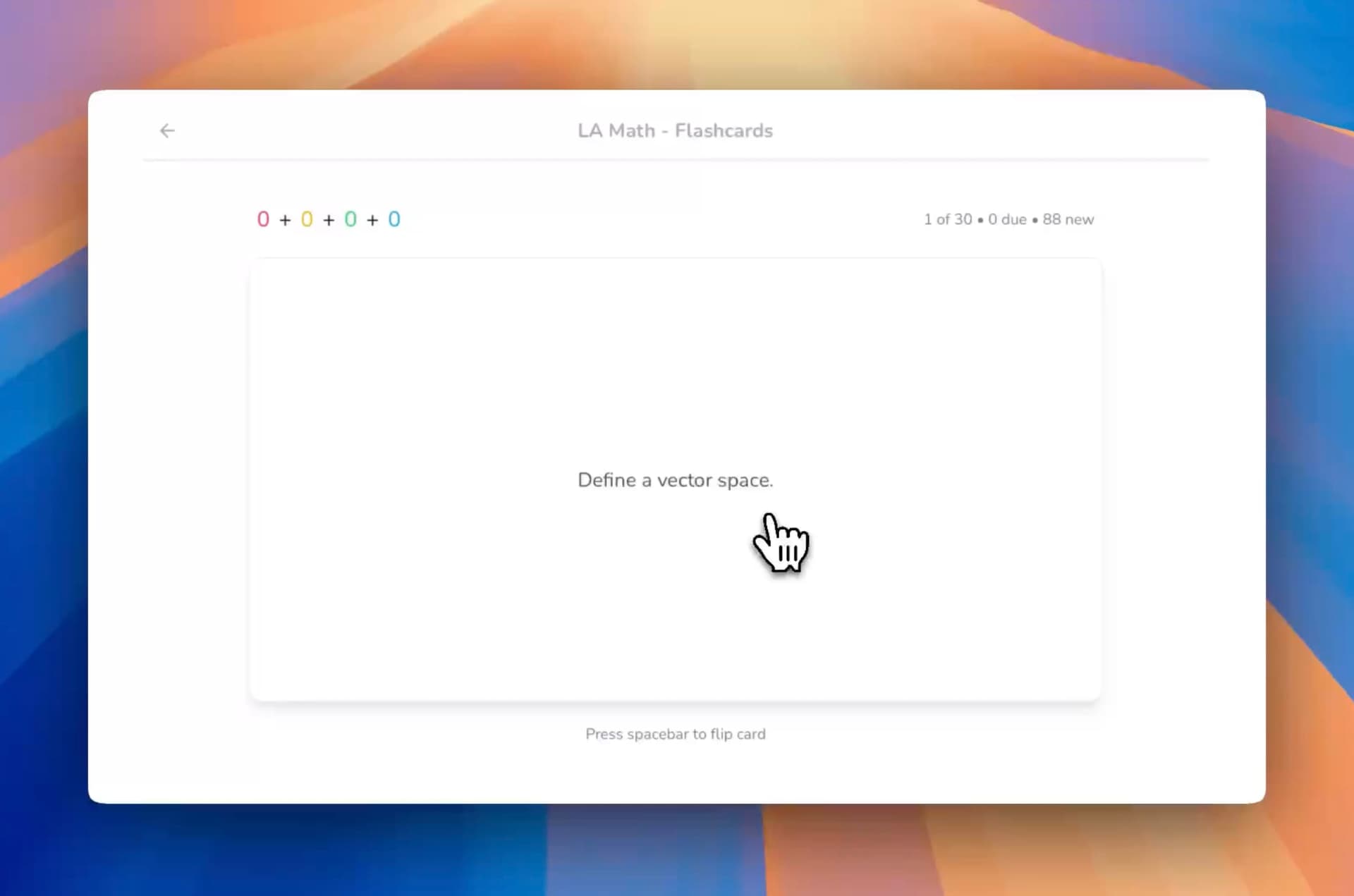
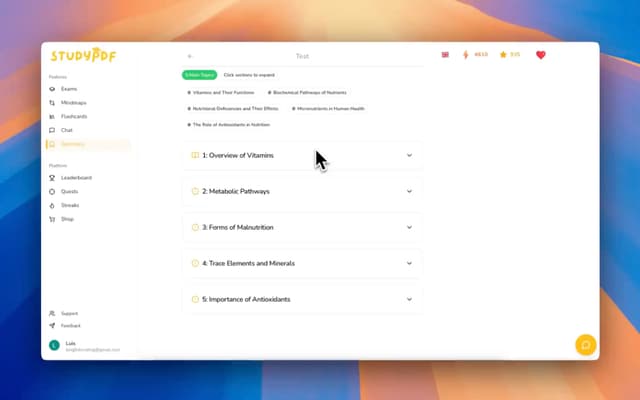
StudyPDF is one way to get realistic practice from your own course material. Upload your lecture slides, notes or readings, and it can build a practice exam with sections and an optional timer. You see no feedback until you submit, like a real test, and then you get a graded report broken down by section.
Every answer updates your mastery per topic, so you can see which topics you keep missing and build the next quiz around those weak spots. You can also set your test date in the Plan tab to get dated review sessions up to the exam. The free plan covers about four materials a week. Try building a practice exam from your notes. It works alongside official practice tests, not instead of them.
What are the best test taking strategies?
Skim the whole test first, budget your time by points, answer easy questions first, read each question twice, and never leave a blank unless wrong answers are penalized. Before the test, take timed practice tests.
How can I do well on a test I did not study for?
Skim for questions you can answer, do those first, use elimination on multiple choice, and write something for every open question. Then plan better for next time. There is no strategy that replaces knowing the material.
Should I go with my first answer?
Only if you have no new reason to change it. Research on answer changes suggests that changes made for a real reason more often fix a wrong answer than break a right one.
How do I stop running out of time on tests?
Divide the time by the points before you start, write target times next to each section, skip anything that stalls you, and practise with a timer at home.