Last updated: June 2026.
The best AI study assistant for summarizing your own textbook chapters in 2026 is StudyPDF, because you upload the actual chapters and it writes the summary only from them, with every point cited back to the exact page. StudyPDF runs on Bo, a course-scoped AI study agent built for your course, not for the internet. You upload your material and Bo answers only from it, so the summary stays true to what you actually have to learn.
Textbooks are essential for deep learning, but their length can be a lot to get through. AI study assistants help by condensing long chapters into shorter, readable summaries that keep the key concepts and drop the filler.
Whether you need to condense long textbook chapters into key points or get focused summaries for exam revision, modern AI summarizers make textbook study faster. We tested the leading platforms to find the best AI study assistant for summarizing textbooks. This article keeps its 2025 ranking title, but all data below is current as of June 2026.
AI Textbook Summarization: The Intelligent Approach
Good AI summarizers do more than shorten text. They keep the meaning, hold the relationships between ideas, and produce summaries you can actually study from. The best platforms also tell you where each point came from.
Essential features for textbook summarization:
- Context Preservation to maintain meaning and relationships
- Length Customization from brief overviews to detailed analyses
- Key Concept Extraction that identifies the most important information
- Structure Recognition that preserves chapter organization
- Study Optimization that highlights exam-relevant content
| Platform | Summarizes only your material | Cites the source page | Length control | Input types | Exports | Price |
|---|
| StudyPDF | ✅ Course-scoped | ✅ Exact page / second / source | ✅ Brief to detailed | PDF (incl. scanned), photos, websites, YouTube | PDF, Word, Anki | Free to start, paid Pro & Ultra |
| StudyFetch | ✅ Your uploads | ⚠️ Varies | ✅ Basic | PDF, slides, lectures | PDF | $9.99/mo |
| Knowt | ✅ Your uploads | ❌ No | ❌ Fixed | PDF, notes, video | Basic | Free, Pro $4.99/mo |
| YouLearn | ✅ Your uploads | ⚠️ Varies | ✅ Adjustable | PDF, video, audio | PDF | Free, Pro $8.99/mo |
| Acemate | ✅ Your uploads | ✅ Keeps citations | ✅ Academic | PDF, slides | PDF | €9.99/mo |
| Mindgrasp | ✅ Your uploads | ⚠️ Varies | ✅ Adjustable | PDF, video, audio | PDF, Word | $9.99/mo |
| Quizlet | ❌ Manual entry | ❌ No | ❌ None | Manual sets | Limited | Free, Plus paid |
How AI Condenses Textbook Chapters into Key Points
AI summarization tools read through textbook content and pull out the most important information while keeping the logical flow and meaning. These systems:
Identify core concepts and their relationships within the text
Preserve important details while eliminating redundancy
Maintain logical structure to support comprehension
Adapt to learning goals by emphasizing exam-relevant content
Provide multiple summary formats for different study needs
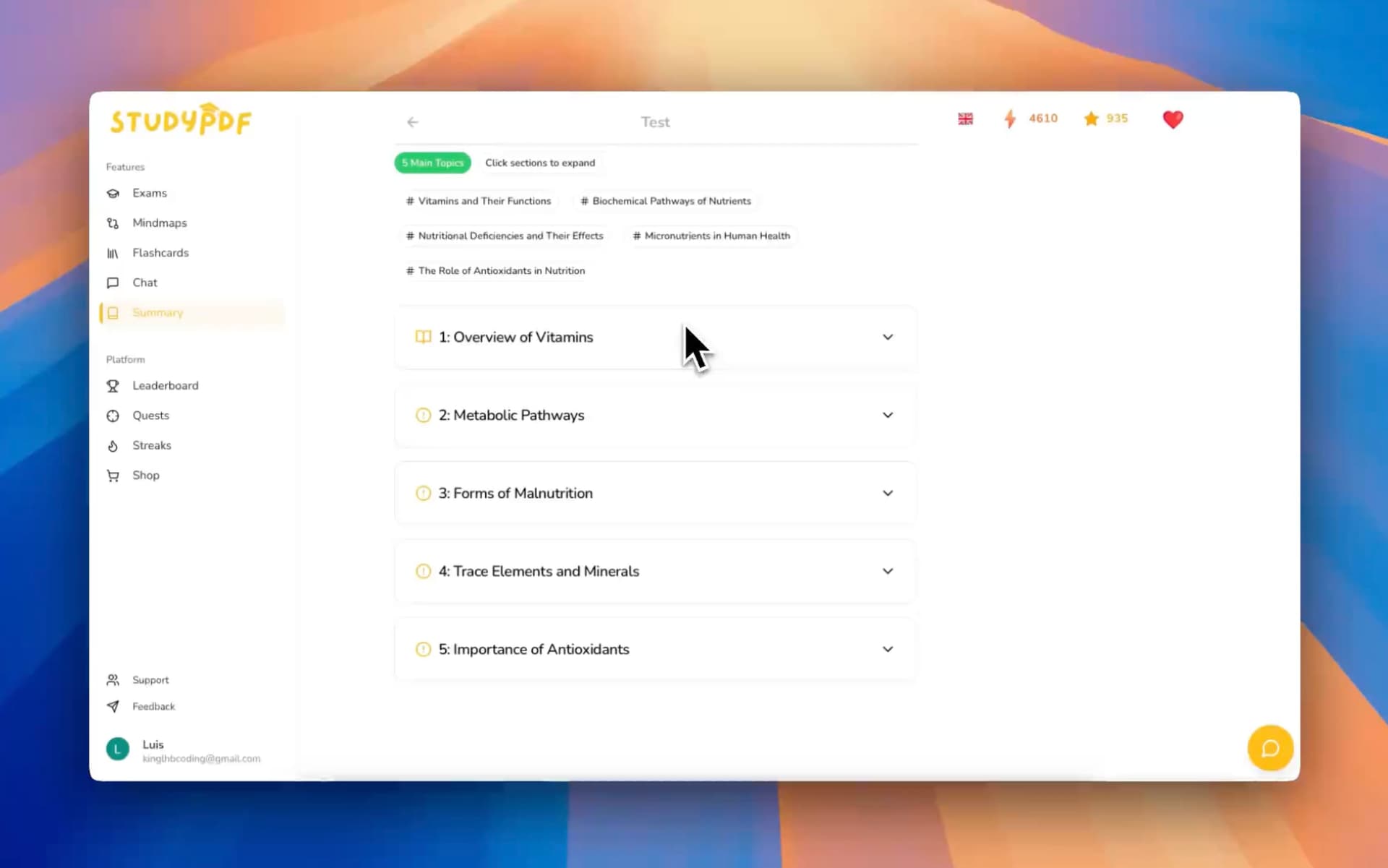
StudyPDF runs on Bo, a course-scoped AI study agent. You upload your own textbook chapters and Bo writes the summary only from your material, with every point cited back to the exact page. It is built for your course, not for the internet, so the summary stays true to what you actually have to learn.
Key Features
- Cited Summaries: Every key point links back to the exact page in your own material
- Built From Your Course: Bo answers only from what you upload, not the open web
- Length Customization: Control summary depth from a brief overview to a detailed breakdown
- Concept Tagging & Mastery: Every upload builds course-level topics and concepts, and Bo tracks your mastery per concept so you can ask what to focus on
- Six More Artifact Kinds: Turn the same chapter into flashcards, a quiz, a practice exam, a study guide, a cheat sheet, or a mind map
- Multi-format Input: Summarize PDFs of any quality (vision OCR reads scanned, handwritten, and photographed pages), photos, websites, and YouTube videos
- Exports: Download any summary as PDF or Word, and flashcards as an Anki deck with math intact
Pros&Cons
Pros
- Every point cites the exact page, so you can check it
- Full control over summary length and depth
- Reads scanned and handwritten pages, not just clean PDFs
- Good for academic and textbook content
- Generous free tier, no card needed to start
Cons
- Mobile app is coming soon, not yet shipped
- Only summarizes what you upload, so it will not answer from the open web
Best For
- Students studying dense academic textbooks
- Learners who need detailed summaries they can trace back to the page
- Those who want control over summary length
- Users preparing for exams with focused content
Pricing
- Free to start, no card required
- Paid Pro and Ultra plans for heavier use
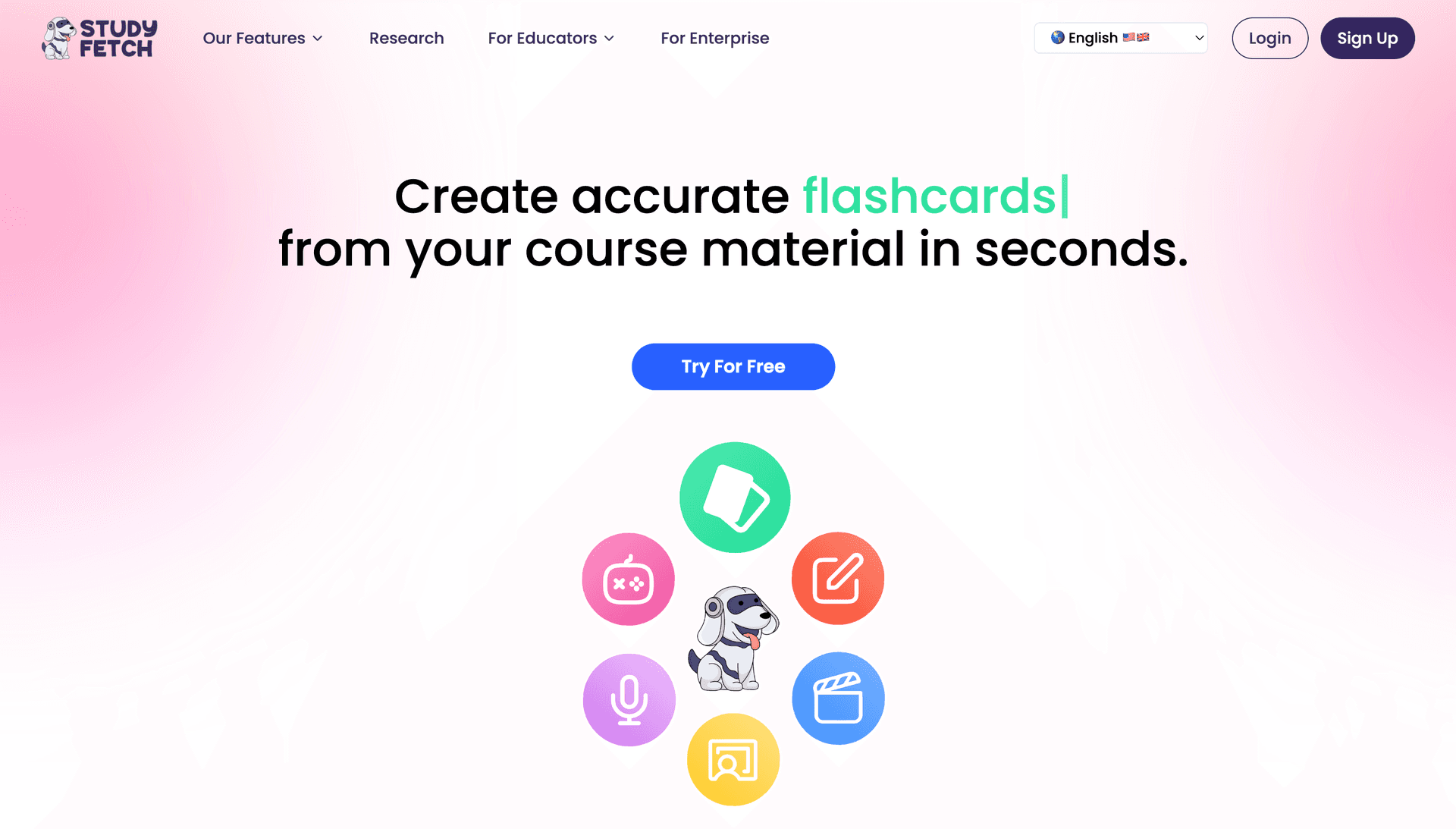
StudyFetch provides reliable textbook summarization with mobile integration and Spark.E AI tutor. It offers solid summary generation for students who study on-the-go.
Key Features
- Mobile Summarization: Create summaries on your phone
- Spark.E Integration: AI tutor explains summary content
- Lecture Integration: Summarize recorded lectures
- Offline Access: Study summaries without internet
- App Ecosystem: Polished mobile experience across devices
Pros&Cons
Pros
- Excellent mobile summary creation
- Integrated AI tutor for concept clarification
- Strong offline capabilities
- 100k+ app downloads prove reliability
Cons
- Summaries do not cite back to the exact source page the way StudyPDF does
- Limited customization options
- Basic summary depth compared to course-scoped tools
Best For
- Mobile learners who study on phones/tablets
- Students who need portable textbook summaries
- Users who want integrated AI tutoring
- Those who study offline
Pricing
- Limited free features
- Pro: $9.99/month
- Custom enterprise pricing
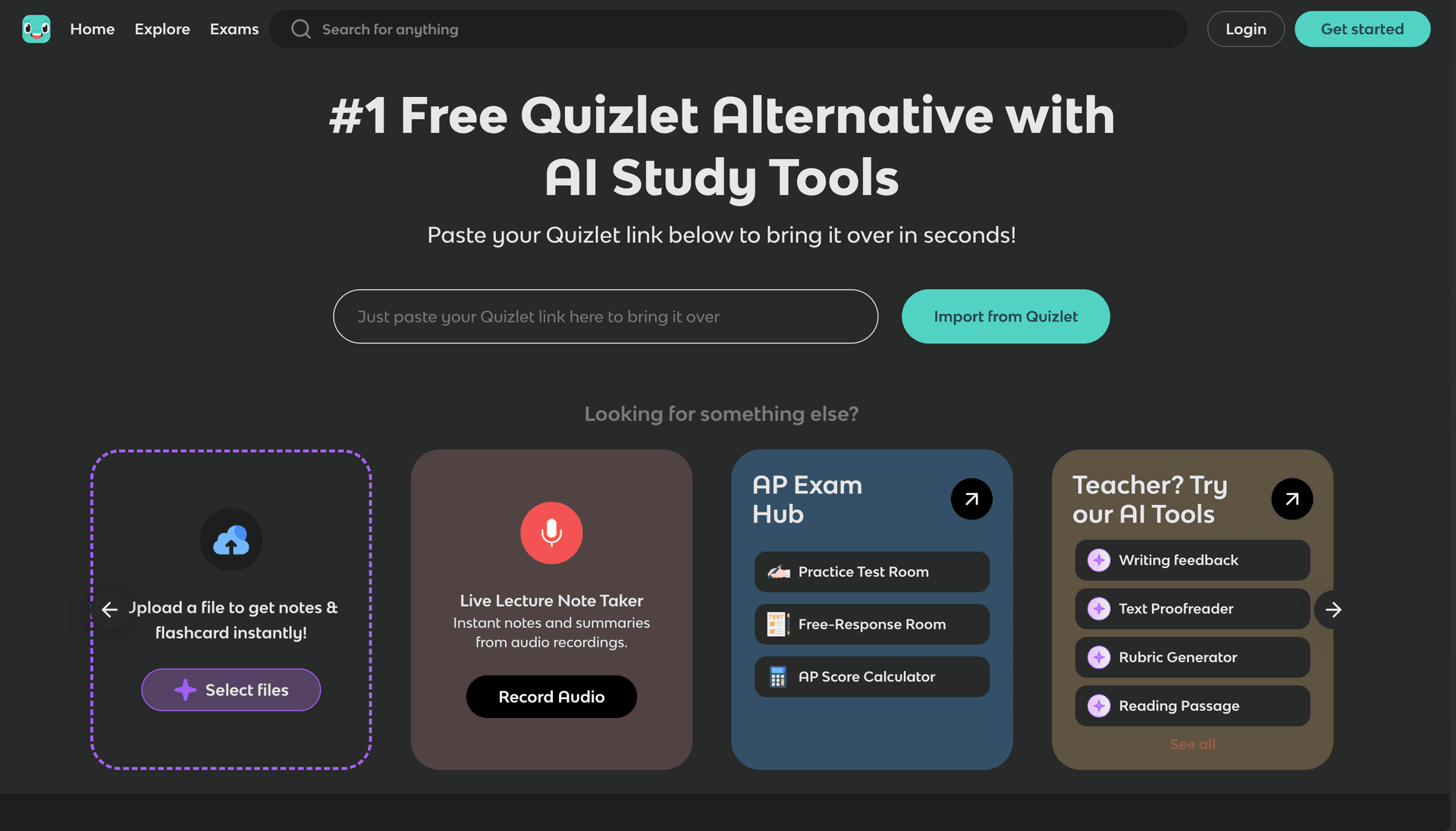
Knowt offers free unlimited textbook summarization with a simple interface, making it accessible for students who need basic summary functionality without advanced features.
Key Features
- Free Unlimited Summaries: No limits on textbook processing
- Simple Interface: Easy upload and summary generation
- Basic Key Extraction: Identifies main points
- Quizlet Integration: Works with existing study materials
- Community Access: Share summaries with other students
Pros&Cons
Pros
- Completely free for unlimited use
- Simple, user-friendly interface
- Good for basic summary needs
- Easy Quizlet integration
Cons
- Less accurate than advanced AI summarizers
- Limited customization and control
- Basic key extraction algorithms
- No advanced study optimization features
Best For
- Students who need free textbook summaries
- Users who want simple, straightforward tools
- Those migrating from Quizlet
- Learners with basic summarization needs
Pricing
- Free unlimited basic features
- Pro: $4.99/month for advanced features
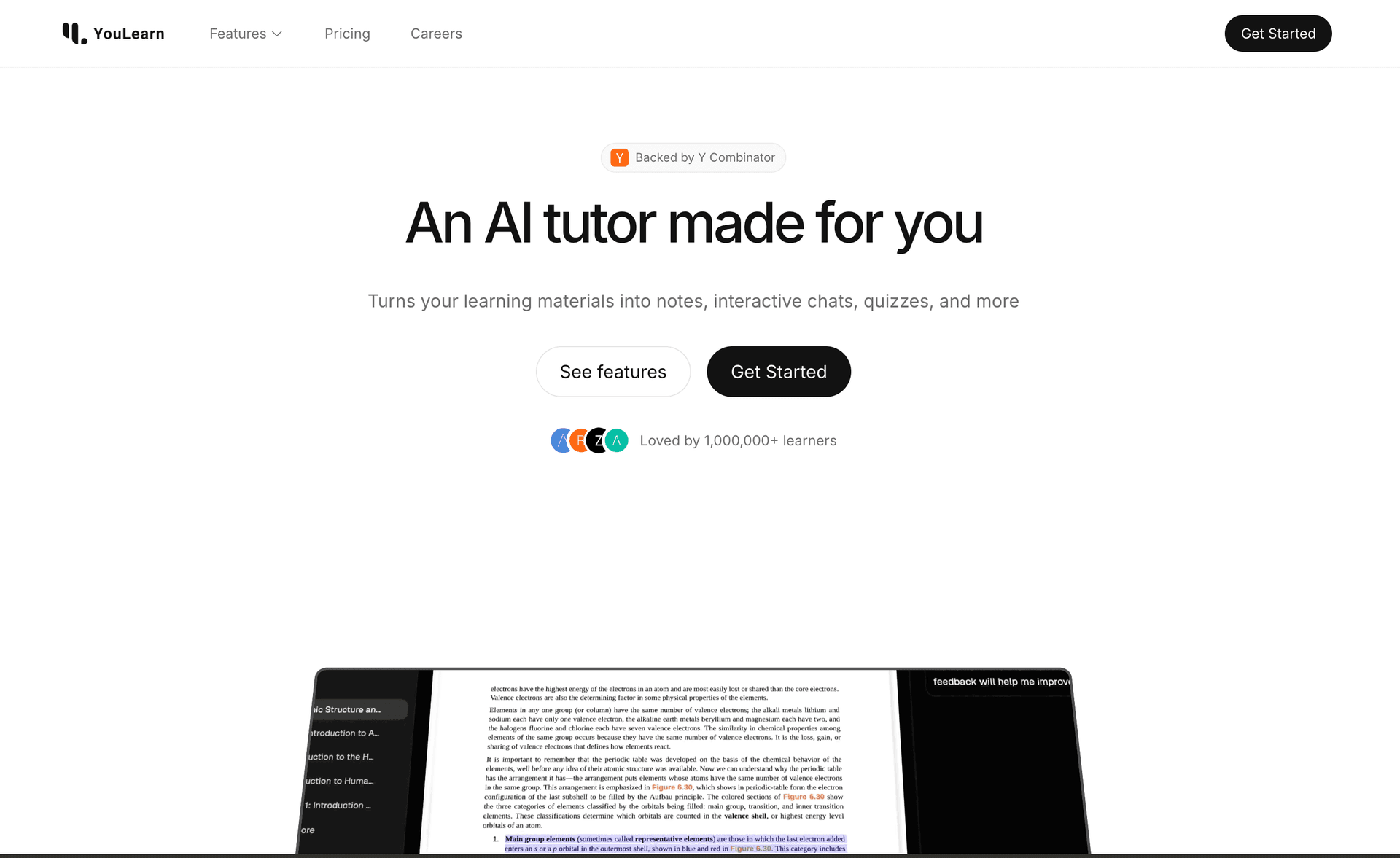
YouLearn combines textbook summarization with voice technology, offering summaries that can be read aloud and interacted with conversationally.
Key Features
- Voice Summaries: AI reads summaries aloud
- Conversational AI: Ask questions about summary content
- Multi-format Support: Various textbook and document types
- Fragments OS: Innovative summary interface
- Interactive Learning: Voice-based content exploration
Pros&Cons
Pros
- Unique voice-based summary interaction
- Conversational AI for deeper understanding
- Multi-format content support
- YC-backed quality and innovation
Cons
- Summaries do not cite back to the exact source page or timestamp
- Limited summary customization
- Voice features may not appeal to all users
- Web-only platform
Best For
- Students who prefer audio learning
- Users who want interactive summaries
- Those who learn through conversation
- Learners seeking innovative study methods
Pricing
- Basic features available
- Pro: $8.99/month for full access
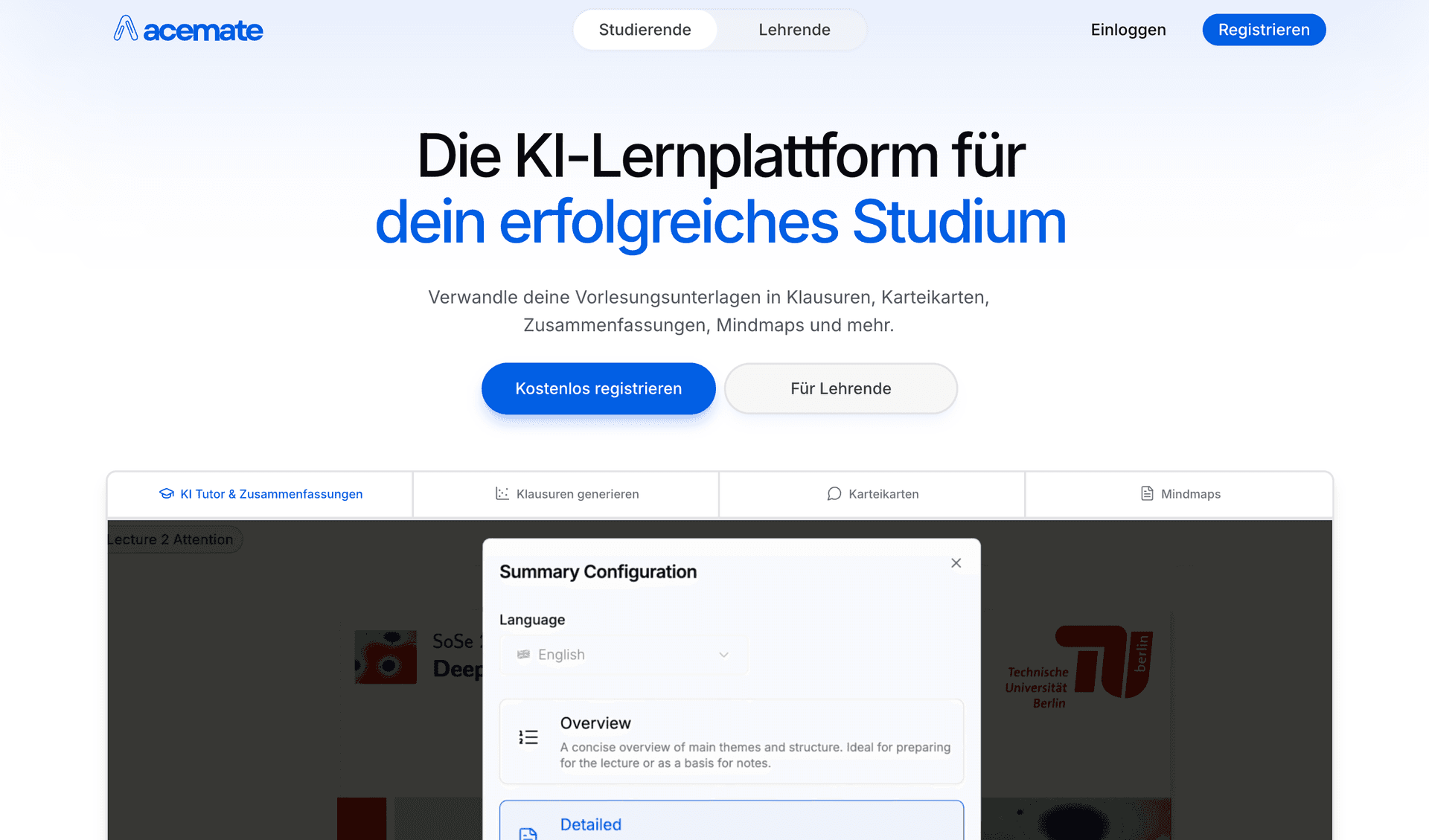
Acemate provides sophisticated textbook summarization for academic content with university partnerships and structured summaries that preserve scholarly accuracy.
Key Features
- Academic Focus: Optimized for scholarly textbooks
- Citation Preservation: Maintains source references
- Structured Summaries: Organized by academic standards
- Knowledge Integration: Links concepts across chapters
- University Credibility: Trusted by academic institutions
Pros&Cons
Pros
- Excellent for academic and scholarly content
- Preserves citations and source accuracy
- Structured summaries for serious study
- Strong university partnerships
Cons
- Complex interface for casual users
- Limited free access
- More expensive than basic alternatives
- Steeper learning curve
Best For
- University students and researchers
- Users studying academic and scholarly textbooks
- Those who need citation-preserving summaries
- Learners requiring structured academic content
Pricing
- Limited free features
- Pro: €9.99/mo
- Custom enterprise pricing
AI to Condense Long Textbook Chapters into Key Points
Condensation Process:
- Content Analysis: AI understands chapter structure and main themes
- Key Point Extraction: Identifies the most important concepts and ideas
- Redundancy Removal: Eliminates repetitive or less important information
- Structure Preservation: Maintains logical flow and relationships
- Length Optimization: Creates concise versions without losing meaning
Best Condensation Tools:
- StudyPDF: Most accurate and comprehensive condensation
- Acemate: Best for academic chapter condensation
- YouLearn: Voice-enhanced chapter summaries
Exam-Focused Summarization:
- Key Concept Highlighting: Emphasizes exam-relevant material
- Question Prediction: Identifies likely test topics
- Review Optimization: Structures content for efficient revision
- Progress Tracking: Shows which chapters need more attention
- Adaptive Focus: Adjusts summary depth based on exam requirements
Top Tools for Exam Revision:
- StudyPDF: Advanced exam-focused summarization
- Knowt: Free unlimited chapter summaries
- StudyFetch: Mobile exam revision summaries
Feature Comparison: AI Textbook Summarization
| Feature | StudyPDF | StudyFetch | Knowt | YouLearn | Acemate | Mindgrasp |
|---|
| Cites source page | ✅ Exact page | ⚠️ Varies | ❌ No | ⚠️ Varies | ✅ Keeps citations | ⚠️ Varies |
| Length Control | ✅ Full | ✅ Basic | ❌ Fixed | ✅ Adjustable | ✅ Academic | ✅ Adjustable |
| Reads scanned/handwritten | ✅ Vision OCR | ⚠️ Limited | ❌ No | ⚠️ Limited | ⚠️ Limited | ⚠️ Limited |
| Input types | ✅ PDF, photo, web, video | ✅ PDF, slides, lecture | ✅ PDF, notes, video | ✅ PDF, video, audio | ✅ PDF, slides | ✅ PDF, video, audio |
| Exports | ✅ PDF, Word, Anki | ✅ PDF | ⚠️ Basic | ✅ PDF | ✅ PDF | ✅ PDF, Word |
| Mobile Apps | 🚧 Coming soon | ✅ iOS/Android | ❌ Web | ❌ Web | ❌ Web | ✅ iOS |
| Free Usage | ✅ Free tier | ✅ Limited | ✅ Unlimited | ✅ Basic | ❌ Limited | ✅ Limited |
The real test of a textbook summary is whether you can trust it. A summary that quietly drops or warps a key point costs you more time than reading the chapter yourself. Here is what separates the tools:
What to look for:
- Source citing: StudyPDF and Acemate tie summary points back to the source. StudyPDF cites the exact page, so you can jump to it and confirm. Most other tools do not.
- Stays on your material: StudyPDF only summarizes what you upload, so it will not pull in unrelated facts from the open web. This matters most for textbooks with their own definitions and notation.
- Handles messy input: StudyPDF reads scanned and handwritten pages with vision OCR. Tools built for clean PDFs often choke on a photo of a page or a scanned chapter.
- Length control: StudyPDF, YouLearn, Acemate, and Mindgrasp let you set how short or detailed the summary is. Knowt is fixed.
For summarizing your own textbook chapters, StudyPDF is the strongest pick in 2026. It only summarizes what you upload, and every point cites the exact page, so you can trust the summary and check it in seconds. You can set the length, read scanned or handwritten pages, and turn the same chapter into flashcards, a quiz, a practice exam, a study guide, a cheat sheet, or a mind map.
The other tools here are still worth a look depending on your need. StudyFetch and Mindgrasp lean into mobile and audio. YouLearn adds a voice layer. Acemate is built around academic citations. Knowt is free and simple for basic summaries.
If your main goal is to condense long chapters into key points you can actually trust for an exam, start with StudyPDF's free tier and add the others if you want their specific extras.