Label the Heart Diagram
Tap a marker on the heart diagram and pick the name that belongs to it. There are ten markers, covering the four chambers, the great vessels and the valves. One thing to keep in mind before you start: the figure is drawn as if you were facing the person, so the heart's own right side appears on the left of the image.
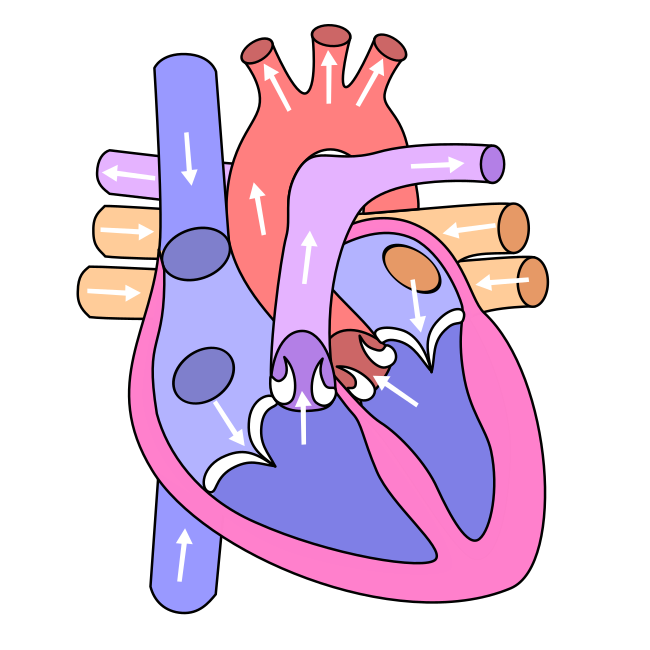
Pick the name of the highlighted marker.
All Nursing & Health quizzes
- Practice test · 15 questions
Anatomy and Physiology Practice Test
- Practice test · 15 questions
EKG Practice Test
- Flashcard deck · 20 cards
Medical Terminology Flashcards

Now make your own
Upload your prep book, slides or notes, or just tell Bo what you want to learn. You do not need a document to start.
All 10 labels on this diagram
Every marker on the figure is listed below with what it does. Answers stay collapsed until you open them, so you can quiz yourself as you scroll.
1. Superior vena cava
Show answer
The large vein that brings oxygen poor blood back from the head, neck and arms and empties into the right atrium. It is the upper of the two great veins feeding that chamber.
2. Aorta
Show answer
The body's largest artery. It leaves the left ventricle, arches over the heart and sends the branches you can see at the top up to the head and arms before running down through the chest.
3. Pulmonary artery
Show answer
Carries oxygen poor blood from the right ventricle to the lungs. It is the one artery in the body that carries deoxygenated blood, which is why exam questions like it.
4. Pulmonary vein
Show answer
Brings oxygen rich blood back from the lungs into the left atrium. There are four of them, and they are the one set of veins that carries oxygenated blood.
5. Right atrium
Show answer
The upper right chamber. It receives oxygen poor blood from the two venae cavae and pushes it through the tricuspid valve into the right ventricle.
6. Left atrium
Show answer
The upper left chamber. It receives oxygen rich blood from the four pulmonary veins and passes it through the mitral valve into the left ventricle.
7. Tricuspid valve
Show answer
Sits between the right atrium and the right ventricle and has three flaps. It stops blood flowing back up into the atrium while the ventricle contracts.
8. Mitral valve
Show answer
Sits between the left atrium and the left ventricle and has two flaps, which is why it is also called the bicuspid valve. It is the valve most often damaged by rheumatic fever.
9. Right ventricle
Show answer
The lower right chamber. It pumps oxygen poor blood the short distance to the lungs, so its wall is much thinner than the left ventricle's.
10. Left ventricle
Show answer
The lower left chamber and the strongest one. It pumps oxygen rich blood into the aorta and out to the whole body, so its muscular wall is the thickest in the heart.
How to read a heart diagram without getting the sides wrong
Almost every heart diagram, including this one, is drawn as if you were standing in front of the person. That means the heart's right side is on the left of the picture. Students lose easy marks on this constantly, so fix it before anything else: left chambers on the right of the image, right chambers on the left.
The next thing to hold on to is the direction of flow. Oxygen poor blood arrives from the body through the superior and inferior venae cavae, fills the right atrium, drops through the tricuspid valve into the right ventricle and is pushed out through the pulmonary valve into the pulmonary artery to the lungs. Oxygen rich blood comes back through the four pulmonary veins into the left atrium, drops through the mitral valve into the left ventricle and is pushed out through the aortic valve into the aorta.
That gives you the two exceptions everyone is asked about. The pulmonary artery is the only artery carrying deoxygenated blood, and the pulmonary veins are the only veins carrying oxygenated blood, because artery and vein describe direction of travel rather than what the blood is carrying.
What the markers on this figure are testing
The ten markers cover the four chambers, the two atrioventricular valves and the great vessels. That is the set almost every anatomy course, nursing programme and biology exam asks for, and it is enough to reason your way through the rest.
Wall thickness is worth noticing while you look. The left ventricle's wall is visibly thicker than the right ventricle's, because the left side pumps to the whole body while the right side only has to reach the lungs. If a question asks which chamber does the most work, the picture answers it.
The valves are easier to remember by their flap count than by their names. Tricuspid has three flaps and sits on the right, mitral has two and sits on the left. The two semilunar valves, pulmonary and aortic, sit at the exits of the ventricles and are not marked here, since they are hidden behind the vessels at this angle.
How StudyPDF turns your own diagrams into labeling practice
Ten markers on one figure will get you through a quiz. They will not get you through a lab practical, where the figure is the one from your own textbook and the labels are the ones your instructor used.
StudyPDF works from your material instead. Upload the chapter, the lecture slides or the lab manual, and Bo, the study agent, builds practice from those exact pages, including the figures in them. Every explanation cites where the answer came from, so you can go straight back to the page when something looks off.
You do not need a file to start. Name a topic instead, for example heart valves or the path of blood through the heart, and Bo builds practice from that. Starting is free.
Written by the StudyPDF team. Last updated 2026-08-19.