A sign on a library door says: "The second-floor study rooms are reserved for groups of three or more. If you are studying alone or with one other person, please use the open tables on the first floor." Who may use a second-floor study room?
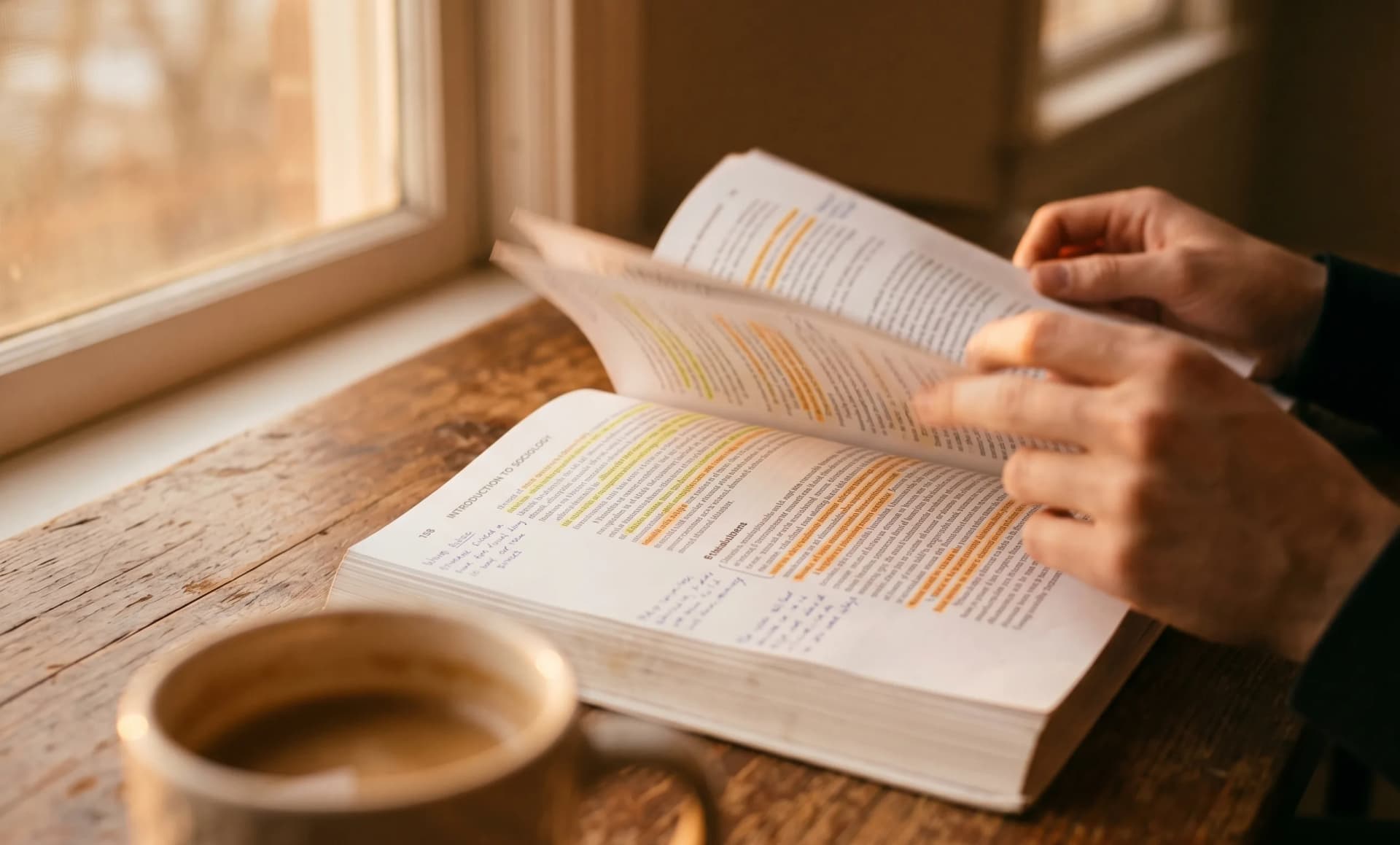
Læser du med dine egne noter? Lav min egen øveprøve
Om denne test
Denne gratis TOEFL-øveprøve har 15 spørgsmål i læsning og ordforråd, skrevet af StudyPDF-teamet i stil med de læseopgaver, ETS beskriver til TOEFL iBT: ord i sammenhæng, hverdagsopslag og beskeder samt korte akademiske tekster. Du møder multiple choice, vælg alle der passer og udfyld det tomme felt. Svar på alle 15 spørgsmål, se så din score og læs forklaringen til hvert spørgsmål. Den dækker kun læsning og ordforråd, ikke lytning, tale eller skrivning.
Alle 15 spørgsmål i overblik
Vil du hellere læse, før du går i gang? Alle spørgsmål i smagsprøven står herunder. Svar og forklaringer er foldet sammen, indtil du åbner dem.
1.A sign on a library door says: "The second-floor study rooms are reserved for groups of three or more. If you are studying alone or with one other person, please use the open tables on the first floor." Who may use a second-floor study room?
- A. A student who is studying alone
- B. Two friends who want to talk quietly
- C. Four classmates working on a project
- D. A visitor who wants to read in silence
Svar: C. Four classmates working on a project
The sign sets one condition for the second-floor rooms: a group of three or more. Four classmates meet it. Someone alone and two friends are both told to use the first-floor tables, and the sign says nothing about silence or visitors. In a notice, look for the rule and the number before you read the choices.
2.Complete the sentence.
The lecture was so _____ that many students struggled to follow the argument, so the professor offered to _____ the main points at the start of the next class.
Muligheder for felt 1: dense, brief, familiar
Muligheder for felt 2: clarify, complicate, postpone
Svar: dense, clarify
The students struggled, so the lecture must have been hard to follow. Dense means packed with difficult material. A brief or familiar lecture would not cause trouble. In the second gap the professor is helping, and clarify means to make something clearer. Complicate does the opposite, and postpone would not help students follow the points. Read both gaps together, because the second choice has to fit the first.
3.Read the passage: "Planners once treated street trees as decoration. Recent studies show that they cool pavements in summer, absorb rainwater and soften traffic noise. As a result, many cities now budget for trees the way they budget for roads and drains." What is the main idea of the passage?
- A. Cities spend more on roads than on trees.
- B. Cities now see street trees as useful infrastructure, not just decoration.
- C. Rainwater is the biggest problem that cities face.
- D. Traffic noise is lower in cities that plant trees.
Svar: B. Cities now see street trees as useful infrastructure, not just decoration.
The passage moves from the old view, trees as decoration, to the new one, trees as something cities pay for like roads and drains. The correct choice covers that whole movement. The other choices take a detail or invent a claim: the passage never compares spending, never calls rainwater the biggest problem, and says trees soften noise, not that noise is lower in every city that plants them.
4.Read the sentence: "The committee's decision was not arbitrary; it followed a set of criteria that had been published months earlier." What does the word "arbitrary" mean here?
- A. Unfair to the people involved
- B. Delayed for a long time
- C. Kept secret from the public
- D. Based on whim, not on a rule or reason
Svar: D. Based on whim, not on a rule or reason
The second half of the sentence gives the contrast: the decision followed published criteria. So arbitrary must mean the opposite, a choice made on a whim and not by a rule. A decision can be fair or unfair without being arbitrary, and the sentence says the criteria were public, which rules out secret. When a sentence has a semicolon or a word like not, the contrast is often the clue to the word.
5.Read the email: "The Thursday lab is moved from 2:00 to 4:00 because the equipment room is being cleaned. Please bring your safety goggles. If you cannot come at the new time, email Dr. Reyes by Wednesday at noon to arrange a make-up session. If the new time works for you, you do not need to reply." Which statements are true?
Vælg alle, der passer.
- A. The lab now starts at 4:00.
- B. A student who cannot attend should email Dr. Reyes by Wednesday at noon.
- C. Safety goggles are optional.
- D. Every student must reply to confirm the new time.
- E. The lab was moved because the equipment room is being cleaned.
Svar: A. The lab now starts at 4:00., B. A student who cannot attend should email Dr. Reyes by Wednesday at noon., E. The lab was moved because the equipment room is being cleaned.
Three details are stated directly: the new start time, the Wednesday noon deadline for anyone who cannot come, and the reason for the move. The email says to bring goggles, so they are not optional, and it says students for whom the new time works do not need to reply. On a select-all question, check each choice against the text one at a time and do not stop after the first match.
6.Read the passage: "The first prototype of the solar oven reached a high temperature, but the engineers were still disappointed. They had hoped it could cook a full meal in under an hour, and it needed nearly two." What can be inferred from the passage?
- A. The oven cooked food more slowly than the engineers wanted.
- B. The oven never got hot enough to cook food.
- C. The engineers stopped working on the oven.
- D. The oven was cheaper than the engineers expected.
Svar: A. The oven cooked food more slowly than the engineers wanted.
The engineers hoped for under an hour and got nearly two, so the oven was slower than they wanted. That is what the text supports. The oven did get hot and did cook the meal, so the second choice is wrong, and nothing in the passage mentions stopping the project or the cost. An inference stays close to the text: it is a small step from what is written, not a guess about what happens next.
7.Complete the sentence.
Researchers expected the new fertilizer to raise yields; _____, crop output in the test fields stayed almost unchanged, which _____ their hypothesis.
Muligheder for felt 1: however, therefore, moreover
Muligheder for felt 2: challenged, confirmed, repeated
Svar: however, challenged
The first clause says what researchers expected and the second says what happened, and the two do not match. However signals that kind of contrast, while therefore signals a result and moreover adds more of the same. Because the output stayed the same when an increase was expected, the result challenged the hypothesis. It did not confirm it, and repeated does not make sense with a hypothesis.
8.Read the passage: "Early telephone operators connected calls by hand. In one small town, the operator knew every resident and would sometimes say, 'She's not home, she's at the church,' instead of connecting the call. Automatic exchanges ended that kind of service, but they let the network grow far beyond what any single operator could manage." Why does the author mention the operator who told callers where a resident was?
- A. To show that the operator made many mistakes
- B. To illustrate the personal service that automation replaced
- C. To argue that small towns had the best telephone networks
- D. To explain how callers were connected by hand
Svar: B. To illustrate the personal service that automation replaced
The example is followed by the words that kind of service, which points back to the operator's personal knowledge of the town. The next clause says automation ended it, so the example shows what was lost. It does not show mistakes, and it does not explain the mechanics of connecting calls, which the first sentence only states. The author also never ranks towns. For a purpose question, read the sentence right after the example.
9.Read the sentence: "Fresh water is scarce in the region, so farmers share wells." Which of the following are close in meaning to "scarce"? Select all that apply.
Vælg alle, der passer.
- A. In short supply
- B. Plentiful
- C. Limited
- D. Abundant
- E. Overflowing
Svar: A. In short supply, C. Limited
Scarce describes something there is not enough of, and the farmers sharing wells confirms it. In short supply and limited both fit. Plentiful, abundant and overflowing all mean the opposite. In a synonym question that has several correct choices, decide the meaning from the sentence first, then sort the choices into same meaning and opposite meaning.
10.Read the passage: "Coral reefs cover less than one percent of the ocean floor, yet they shelter about a quarter of marine species. Rising water temperatures make corals expel the algae that live in their tissue and give them their color, a process called bleaching. Bleached coral is not dead, but it is starving, and it can recover if temperatures drop soon enough." According to the passage, which statements are true?
Vælg alle, der passer.
- A. Reefs shelter a share of marine species much larger than the area they cover.
- B. Bleaching happens when corals expel the algae that live in them.
- C. Bleached coral is always dead.
- D. Bleached coral can recover if temperatures drop soon enough.
- E. Corals keep their color when the algae leave.
Svar: A. Reefs shelter a share of marine species much larger than the area they cover., B. Bleaching happens when corals expel the algae that live in them., D. Bleached coral can recover if temperatures drop soon enough.
The first sentence contrasts a small area with a large share of species, the second defines bleaching, and the last says bleached coral is not dead and can recover. The passage says the algae give corals their color, so the color does not stay when they leave. Questions that begin with according to the passage want what the text says, not what you know about reefs.
11.Which sentence best fits the gap in this notice? "Starting Monday, bicycles must be parked in the racks behind the gym. ____ Bikes left near the main doors will be moved to the racks by staff."
- A. This rule keeps the entrances clear for people with strollers and wheelchairs.
- B. Gym memberships cost less for students.
- C. Bicycles became popular in the 1800s.
- D. The racks were painted last year.
Svar: A. This rule keeps the entrances clear for people with strollers and wheelchairs.
The sentence before the gap states a rule and the sentence after it describes how the rule is enforced near the main doors. The correct choice explains why the rule exists and connects to the doors. The other choices are on topic in a loose way, bikes or the gym, but none of them connects the rule to the enforcement. A sentence that fits has to link what comes before and after it.
12.Read the passage: "Few historians doubt that the library was founded before 1500, yet no founding document has survived. Most of the evidence comes from letters written in the following decades that mention the library by name." On what do historians base their dating of the library?
- A. A founding document kept in the library
- B. Letters from later decades that mention the library
- C. The age of the library building
- D. Records kept by the library's first visitors
Svar: B. Letters from later decades that mention the library
The passage says no founding document survived, which rules out the first choice, and that most of the evidence comes from letters written afterward that name the library. It says nothing about the building or about visitors' records. A detail question has a direct answer in the text, and one clause such as yet no document has survived can remove a tempting choice.
13.Complete the sentence.
The new parking policy will _____ on the first day of the semester, so check the updated rules before then.
Muligheder for felt 1: take effect, take place, take over
Svar: take effect
A rule or policy takes effect, which means it begins to apply. Take place is used for events such as a meeting or a festival, and take over means to assume control. Phrases like this are learned as units, so when you study vocabulary, write down the whole phrase and not just the single word.
14.Read the message: "Hi Sam, the number 12 bus is running late because of road work on Elm Street, so I'm going to walk to the library instead. I'll meet you at the front desk at 3:30. If you get there first, grab a table by the windows." What can be inferred about the writer's original plan?
- A. To meet Sam at a table by the windows
- B. To walk to the library with Sam
- C. To cancel the meeting because of road work
- D. To take the number 12 bus to the library
Svar: D. To take the number 12 bus to the library
The writer says the bus is late and so they will walk instead, which means the first plan was to ride the bus. The table by the windows is a suggestion for Sam, and the meeting is not cancelled, since the writer proposes a time and a place. Words like instead and so often show that a plan changed, and the inference is what the plan was before.
15.Which choice best expresses the essential information in this sentence? "Although the museum's collection grew steadily through donations, it lacked the funds to display most of it, so much of the art stayed in storage."
- A. Donations grew the collection, but a lack of funds kept most of it out of view.
- B. Donations stopped because the museum lacked funds.
- C. The museum chose to keep its art in storage to protect it.
- D. The museum spent its funds on displaying donated art.
Svar: A. Donations grew the collection, but a lack of funds kept most of it out of view.
The sentence has two linked facts: the collection grew through donations, and without funds most of it was not shown. The correct choice keeps both and the contrast between them. The second choice reverses the cause, the third invents a reason the text never gives, and the fourth says the opposite of lacked the funds. When you shorten a sentence, keep every key fact and keep the relationship between them.
Hvad TOEFL iBT Reading-delen tester, og hvad du øver her
TOEFL iBT er den engelskprøve, mange universiteter beder internationale ansøgere om at tage. ETS ændrede prøven i januar 2026, så ældre bøger og videoer kan beskrive et andet format. Denne side blev senest tjekket mod ETS' egne sider i oktober 2026, og den gentager hverken antal spørgsmål, tider eller pointskalaen, for det er netop de detaljer, der flytter sig. Bekræft dem hos ETS, før du planlægger dit tempo.
Ifølge ETS måler Reading-delen, hvor godt du læser og forstår engelsk i hverdagen på campus og i akademiske sammenhænge. Den bruger tre opgavetyper. Complete the Words beder dig færdiggøre ord, hvor en del mangler, i en kort tekst, og det tester ordforråd og betydning ud fra sammenhængen. Read in Daily Life bruger korte tekster som opslag og beskeder, med spørgsmål om hovedpointer, vigtige detaljer og det underforståede. Read an Academic Passage bruger en kort tekst som fra et universitetskursus, med spørgsmål om hovedpointer, understøttende detaljer og vigtige ord. ETS skriver også, at al den information, du skal bruge, står i teksten, og at du ikke behøver forhåndsviden om emnet.
De 15 spørgsmål her øver de samme færdigheder med tekster, vi selv har skrevet. De gengiver ikke ETS' opgaver. Fordi de ikke kræver lyd eller mikrofon, dækker de kun læsning og ordforråd. Til lytning, tale og skrivning kan du bruge den prøve, ETS udgiver, som har spørgsmål fra alle fire dele.
Sådan bruger du smagsprøven, og hvad du skal øve først
Tag alle 15 spørgsmål i ét stræk uden ordbog, og læs så forklaringen til hvert spørgsmål, også dem du svarede rigtigt på. Et forkert svar peger som regel på en færdighed. Hvis du missede ordforrådsspørgsmålet og udfyld-det-tomme-felt-spørgsmålet, så arbejd på at gætte betydningen ud fra ordene omkring et nyt ord, ikke på at lære netop de to ord udenad.
Ved spørgsmål om en tekst skal du finde den sætning, der besvarer spørgsmålet, før du kigger på svarmulighederne. Forkerte svar er ofte sande i den virkelige verden, men står ikke i teksten, eller de bruger et ord fra teksten med en anden betydning. Når et spørgsmål handler om et ord, så sæt hver svarmulighed ind i sætningen i stedet for det oprindelige ord, og se, hvilken der bevarer meningen. Når et spørgsmål spørger, hvad der kan udledes, så vælg det svar, teksten understøtter, uden at du har brug for viden udefra.
I ugerne før din prøve kan du læse en kort engelsk tekst hver dag, for eksempel en nyhedsartikel, en universitetsside eller et opslag, og skrive de ord ned, du måtte gætte på. Vend tilbage til dem to dage senere, og tjek, om du stadig kender dem. Korte repetitioner med 10 eller 15 ord er lettere at holde fast i end én lang liste.
Sådan bygger StudyPDF fulde øveprøver ud fra dit eget studiemateriale
Femten spørgsmål kan vise dig, hvilken læsefærdighed der er svagest. De kan ikke gøre dig klar alene, og et generisk sæt ved ikke, hvilke ord eller emner du bliver ved med at ramme forkert.
StudyPDF tager i stedet udgangspunkt i dit materiale. Upload din TOEFL-forberedelsesbog, en ordliste, du selv har lavet, en artikel, du gerne vil forstå bedre, eller dine egne noter. Tryk derefter på Nyt materiale, vælg en øveprøve eller flashcards, vælg de filer som kilder, og bestem, hvor lang den skal være. Du får spørgsmål skrevet ud fra præcis de sider, og hver forklaring henviser til, hvor svaret kommer fra. Kør den igen, når du har repeteret, eller afgræns den til ét emne, for eksempel akademisk ordforråd.
Bo er tutoren til resten. Spørg, hvorfor et svar er rigtigt, eller hvad et ord betyder i den sætning, du fandt det i, så forklarer Bo det ud fra dine egne sider.
Du behøver ikke uploade noget for at komme i gang. Nævn i stedet et emne, for eksempel ord om miljø eller at læse en kort akademisk tekst, så får du øvespørgsmål om det. Det er gratis at komme i gang.
Skrevet af StudyPDF-teamet. Sidst opdateret 19. august 2026.
Godt at vide
Er denne TOEFL-øveprøve virkelig gratis?
Ja. Alle 15 spørgsmål, scoreskærmen og hver eneste forklaring er gratis og kører i din browser. Der er ingen betalingsmur på denne side.
Dækker øveprøven hele TOEFL?
Nej. Den dækker kun læsning og ordforråd, fordi lytning kræver lyd, og tale og skrivning kræver en person eller et program, der bedømmer dine svar. ETS udgiver en prøve med spørgsmål fra alle fire dele. ETS ændrede TOEFL iBT i januar 2026, så bekræft det aktuelle format, tiden og pointgivningen på ETS' egen side, før du planlægger din læsning.
Er det rigtige TOEFL-spørgsmål, og er I tilknyttet ETS?
Nej. StudyPDF-teamet har skrevet alle 15 spørgsmål, tekster og forklaringer for at øve de læsefærdigheder, ETS beskriver. Ingen kommer fra ETS, fra et kursusfirma eller fra spørgsmål, som nogen har husket fra prøven. StudyPDF er ikke tilknyttet ETS, og TOEFL og TOEFL iBT er registrerede varemærker tilhørende ETS. Brug ETS' officielle materiale til at se, hvordan den rigtige prøve ser ud.
Kan jeg få mere TOEFL-læseøvelse ud fra mit eget studiemateriale?
Ja. Upload din TOEFL-forberedelsesbog, en ordliste, en artikel eller dine egne noter til StudyPDF, så bygger Bo fulde øveprøver og flashcards ud fra præcis de sider, med forklaringer der henviser til, hvor hvert svar kommer fra. Har du kun en bog på papir, så nævn i stedet et emne, for eksempel akademisk ordforråd om naturvidenskab, så skriver Bo en prøve om det.
Har du brug for mere end en smagsprøve?
Upload din egen eksamensbog, dine slides eller noter, så bygger Bo fulde øveprøver ud fra præcis dit materiale, holder styr på de begreber du bliver ved med at ramme forkert, og går efter dine svage punkter. Gratis at komme i gang.