AP Gov-øveprøve: unit 1 til 5
- 15 spørgsmål
- Cirka 15 min.
- Gratis
Testens spørgsmål er på engelsk.
In Federalist No. 10, James Madison argued that the dangers of factions are best controlled by
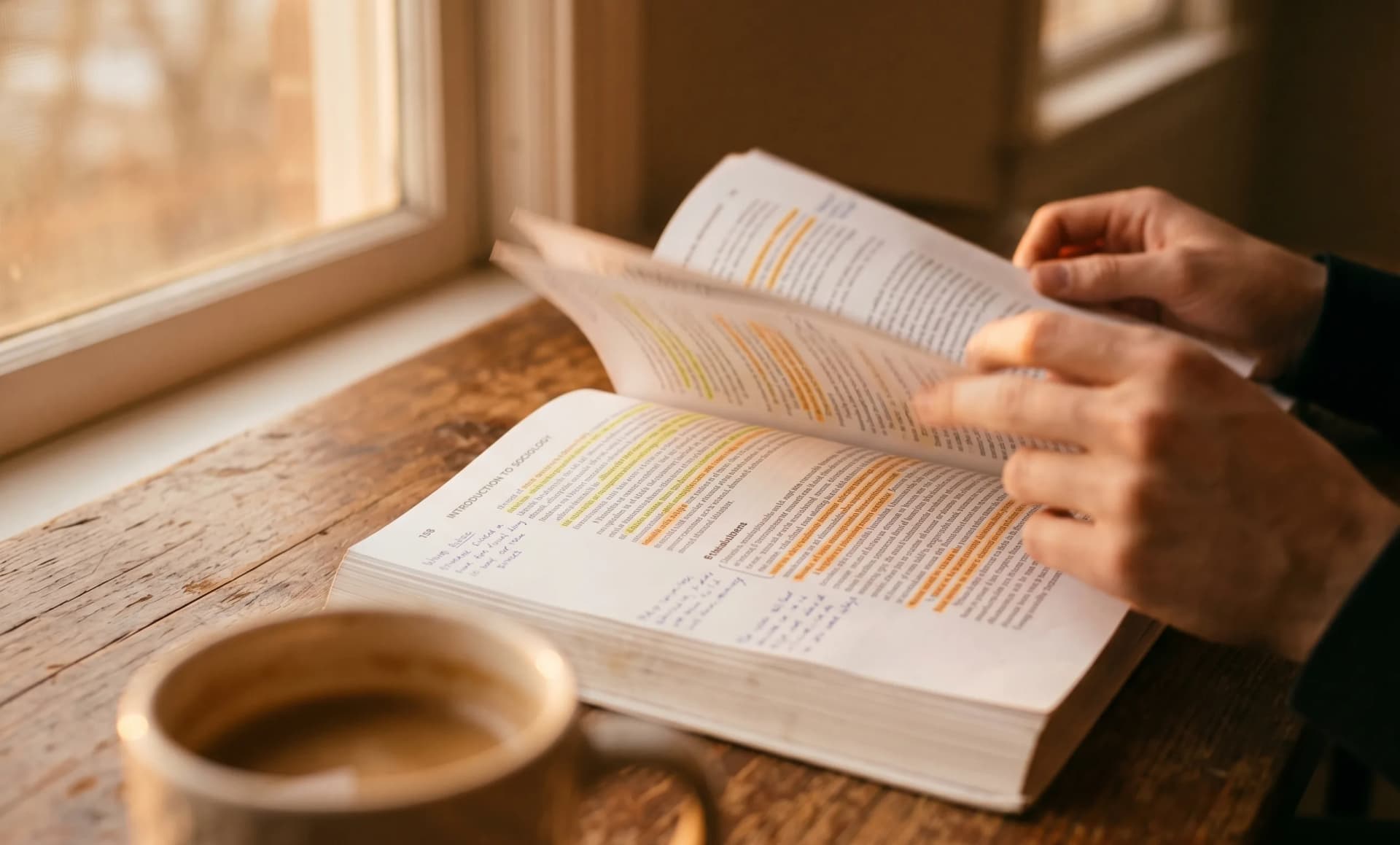
Læser du med dine egne noter? Lav min egen øveprøve
Om denne test
Det her er en gratis smagsprøve på 15 spørgsmål til AP Gov, skrevet af StudyPDF-teamet ud fra de fem units i faget AP U.S. Government and Politics. Den dækker de grundlæggende dokumenter, Kongressen, præsidentembedet og domstolene, borgerlige frihedsrettigheder og borgerrettigheder, politiske overbevisninger og politisk deltagelse, med flere spørgsmål bygget på de obligatoriske Supreme Court-sager. Du møder multiple choice, vælg alle der passer og udfyld det tomme felt. Svar på alle 15 spørgsmål, se så din score og læs forklaringen til hvert spørgsmål.
Alle 15 spørgsmål i overblik
Vil du hellere læse, før du går i gang? Alle spørgsmål i smagsprøven står herunder. Svar og forklaringer er foldet sammen, indtil du åbner dem.
1.In Federalist No. 10, James Madison argued that the dangers of factions are best controlled by
- A. banning political parties and interest groups
- B. keeping government small enough for citizens to vote on every law
- C. a large republic with many competing interests, so that no single faction easily dominates
- D. letting each state decide which groups may organize
Svar: C. a large republic with many competing interests, so that no single faction easily dominates
Madison thought factions could not be removed without destroying liberty, so the goal was to control their effects. In a large republic with representatives and many different interests, it is harder for one faction to form a majority and impose its will. A small direct democracy was the model he warned against. Federalist No. 10 is a required foundational document, and it is usually paired with Brutus No. 1.
2.The Anti-Federalist essay Brutus No. 1 warned that the new Constitution would
- A. create a strong national government that would grow distant from the people and absorb the states
- B. give the states too much power to block national policy
- C. allow the president to be elected directly by voters
- D. limit Congress so much that it could not raise an army
Svar: A. create a strong national government that would grow distant from the people and absorb the states
Brutus argued that a free republic works best in a small territory where representatives know their voters. He feared that broad national powers, such as taxing and the Necessary and Proper Clause, would swallow the states and leave citizens with no real control. The other choices describe the opposite concern, which is closer to the problems the Federalists saw in the Articles of Confederation.
3.In McCulloch v. Maryland (1819), the Supreme Court ruled that Maryland could not tax the national bank. Which principle supports that ruling?
- A. States have the final say over any bank that operates inside their borders.
- B. The president may create federal agencies without Congress.
- C. The Tenth Amendment forbids Congress from creating any institution not named in the Constitution.
- D. Congress has implied powers under the Necessary and Proper Clause, and federal law is supreme over state action that conflicts with it.
Svar: D. Congress has implied powers under the Necessary and Proper Clause, and federal law is supreme over state action that conflicts with it.
The Court said the Constitution lets Congress create a national bank as a means of carrying out its listed powers, even though a bank is not named. A state tax that could destroy the bank would let a state defeat a federal institution, which the Supremacy Clause does not allow. The case is a core example of a broad reading of national power. United States v. Lopez is the usual contrast, because there the Court set a limit on the commerce power.
4.Which of these is a power given only to the Senate?
- A. Beginning impeachment by voting on articles of impeachment
- B. Approving treaties by a two-thirds vote
- C. Starting bills that raise revenue
- D. Overriding a presidential veto
Svar: B. Approving treaties by a two-thirds vote
Only the Senate ratifies treaties, with two-thirds of the senators present, and it also confirms major presidential appointments. The House votes on articles of impeachment and starts revenue bills. Overriding a veto takes a two-thirds vote in both chambers, so it is not exclusive to either one. A question that asks for the exclusive powers of each chamber is a common multiple-choice item.
5.A group of senators uses a filibuster to block a vote on a bill. Under Senate rules for legislation, what can end the debate?
- A. A simple majority of the House of Representatives
- B. A presidential order to the Senate
- C. A cloture vote by three-fifths of the Senate, which is 60 senators when all seats are filled
- D. A ruling by the Supreme Court
Svar: C. A cloture vote by three-fifths of the Senate, which is 60 senators when all seats are filled
Cloture is the Senate's way of ending debate, and for most legislation it takes three-fifths of the Senate. That is why a bill that has 51 supporters can still stall. The House has its own rules, including a Rules Committee that limits debate, and neither the president nor the courts can end a Senate debate. Be ready to explain how the filibuster makes the Senate different from the House.
6.Which of these are checks that Congress has on the executive branch?
Vælg alle, der passer.
- A. Overriding a veto with a two-thirds vote in both houses
- B. Declaring an executive action unconstitutional
- C. Confirming presidential appointments in the Senate
- D. Issuing executive orders
- E. Impeaching a president in the House of Representatives
Svar: A. Overriding a veto with a two-thirds vote in both houses, C. Confirming presidential appointments in the Senate, E. Impeaching a president in the House of Representatives
Veto overrides, Senate confirmation and impeachment are all ways Congress limits the president. Declaring an executive action unconstitutional is judicial review, which belongs to the courts. Issuing executive orders is something the president does, not a check on the president. Sorting each power into the branch that holds it is a basic skill for Unit 2.
7.Complete the sentence.
In _____ (1803), the Supreme Court established the power of judicial review, the authority to strike down laws that conflict with the Constitution.
Muligheder for felt 1: Gideon v. Wainwright, Marbury v. Madison, Brown v. Board of Education, Baker v. Carr
Svar: Marbury v. Madison
Chief Justice John Marshall wrote that it is the duty of the courts to say what the law is, and that a law that conflicts with the Constitution cannot stand. The Constitution does not use the words judicial review, so this case is where the power comes from. It is one of the required cases, and it comes up often in questions about the strength of each branch.
8.Students wear black armbands to school to protest a war. The school suspends them, and they sue. Which required case is most relevant?
- A. Tinker v. Des Moines, which protects student speech unless it substantially disrupts school
- B. Schenck v. United States, which allows no speech during wartime
- C. Engel v. Vitale, which bans prayer on school grounds at any time
- D. Wisconsin v. Yoder, which gives students a right to skip school
Svar: A. Tinker v. Des Moines, which protects student speech unless it substantially disrupts school
In Tinker the Court held that students do not lose their First Amendment rights at the schoolhouse gate, and that a school needs evidence of a substantial disruption to punish symbolic speech. The other choices misstate their cases. Schenck set a clear and present danger test and did not ban all wartime speech. Engel was about school-sponsored prayer, and Yoder gave a narrow religious exemption to Amish families.
9.Which of these statements about required Supreme Court cases are accurate?
Vælg alle, der passer.
- A. Engel v. Vitale held that a prayer written and led by a public school violates the Establishment Clause.
- B. Baker v. Carr held that courts may never hear cases about how legislative districts are drawn.
- C. In New York Times v. United States, the Court refused to block newspapers from publishing the Pentagon Papers.
- D. Wisconsin v. Yoder held that the Free Exercise Clause never protects a religious practice from a state law that requires school attendance.
- E. Schenck v. United States upheld a conviction for speech that created a clear and present danger.
Svar: A. Engel v. Vitale held that a prayer written and led by a public school violates the Establishment Clause., C. In New York Times v. United States, the Court refused to block newspapers from publishing the Pentagon Papers., E. Schenck v. United States upheld a conviction for speech that created a clear and present danger.
Engel, New York Times and Schenck are described correctly. Baker v. Carr went the other way: the Court said that unequal districts raise questions courts can hear, which opened the door to the one person, one vote cases. Yoder also went the other way: the Court said that Amish families could not be forced to send their children to school after eighth grade, because that conflicted with their free exercise of religion. Mixing up the direction of a ruling is a common trap.
10.Complete the sentence.
The Bill of Rights first limited only the national government. Through selective incorporation, the Supreme Court has applied most of its protections to the states by using the due process clause of the _____ Amendment.
Muligheder for felt 1: Tenth, Fourteenth, Fifteenth, Seventeenth
Svar: Fourteenth
The Fourteenth Amendment says that no state may deny any person life, liberty or property without due process of law. Over the twentieth century the Court read most of the Bill of Rights into that clause, one right at a time, in cases such as Gideon v. Wainwright and McDonald v. Chicago. The same amendment also contains the equal protection clause, which is the base of Brown v. Board of Education.
11.Which statements about civil rights in the AP Gov course are accurate?
Vælg alle, der passer.
- A. Brown v. Board of Education held that state-required segregation in public schools violates the equal protection clause.
- B. Shaw v. Reno held that a district drawn mainly on race, with a very odd shape, can be challenged under equal protection.
- C. Martin Luther King Jr.'s Letter from Birmingham Jail argues that people have a moral duty to resist unjust laws by violence.
- D. The equal protection clause applies only to the federal government.
- E. The Letter from Birmingham Jail defends nonviolent civil disobedience against unjust laws.
Svar: A. Brown v. Board of Education held that state-required segregation in public schools violates the equal protection clause., B. Shaw v. Reno held that a district drawn mainly on race, with a very odd shape, can be challenged under equal protection., E. The Letter from Birmingham Jail defends nonviolent civil disobedience against unjust laws.
Brown and Shaw are described correctly, and the Letter from Birmingham Jail defends nonviolent direct action and open disobedience of unjust laws, with a willingness to accept the penalty. The letter does not call for violence. The equal protection clause is in the Fourteenth Amendment and limits the states, and Brown is the best-known example of that.
12.A news site posts an online poll about a new policy, and only visitors who choose to click can answer. Why can its result not be trusted to describe all adults?
- A. The sample is too large to be accurate.
- B. The poll asks about only one policy.
- C. People who choose to respond may differ from the public, so the sample is not random.
- D. Online polls always have a margin of error of zero.
Svar: C. People who choose to respond may differ from the public, so the sample is not random.
When respondents select themselves, people with strong opinions or an interest in the site are more likely to answer, which creates selection bias. A reliable poll draws a random sample so that every member of the population has a chance of being chosen, and then reports a margin of error. A bigger sample does not fix a biased one.
13.Citizens United v. FEC (2010) held that
- A. corporations may not take part in elections in any form
- B. the government may not ban independent political spending by corporations and unions, which is protected speech
- C. candidates must accept public funds to run for office
- D. political parties may not raise money from individuals
Svar: B. the government may not ban independent political spending by corporations and unions, which is protected speech
The Court ruled that independent expenditures, meaning spending not coordinated with a candidate, are protected by the First Amendment even when a corporation or union makes them. The ruling led to super PACs. It did not remove limits on direct contributions to candidates, and it is a core example of the debate over money and speech in Unit 5.
14.Which feature of the American electoral system is most often cited as a reason that third parties rarely win elections?
- A. The use of proportional representation in congressional elections
- B. A ban on candidates who do not belong to a party
- C. Free public funding for the two largest parties only
- D. Single-member districts where the candidate with the most votes wins
Svar: D. Single-member districts where the candidate with the most votes wins
In a winner-take-all system with one seat per district, a candidate who finishes second or third gets nothing, so voters tend to avoid a candidate who looks unlikely to win. This tends to produce two major parties. Proportional representation, which gives parties seats by their share of the vote, helps small parties, but it is not used for Congress. Ballot access rules and campaign funding also matter, though they are not the first reason given.
15.Complete the sentence.
Ratified in 1971, the _____ Amendment lowered the national voting age to 18.
Muligheder for felt 1: Fifteenth, Nineteenth, Twenty-fourth, Twenty-sixth
Svar: Twenty-sixth
The Twenty-sixth Amendment came during the Vietnam War, when many people argued that those old enough to be drafted were old enough to vote. The Fifteenth barred denying the vote on account of race, the Nineteenth gave women the vote, and the Twenty-fourth banned poll taxes in federal elections. Each voting amendment extended the electorate to a different group.
Hvordan AP Gov-prøven ser ud, og hvordan unitsene vægtes
AP U.S. Government and Politics-prøven er fuldt digital og tages i Bluebook-appen. Da denne side sidst blev tjekket i oktober 2026, havde College Board sat 2027-prøven til tirsdag den 4. maj i Session 1. Section I har 55 multiple choice-spørgsmål på 1 time og 20 minutter og tæller 50 procent af scoren. Section II har 4 free-response-spørgsmål på 1 time og 40 minutter og tæller de andre 50 procent: en anvendelse af begreber (concept application), en kvantitativ analyse, en sammenligning af Supreme Court-sager (SCOTUS comparison) og et argumenterende essay.
Multiple choice-delen vægtes efter unit. Unit 1, Foundations of American Democracy, er 15 til 22 procent. Unit 2, Interactions Among Branches of Government, er den største med 25 til 36 procent. Unit 3, Civil Liberties and Civil Rights, er 13 til 18 procent. Unit 4, American Political Ideologies and Beliefs, er den mindste med 10 til 15 procent. Unit 5, Political Participation, er 20 til 27 procent. Smagsprøven rører ved alle fem units, så brug vægtene til at beslutte, hvor du skal bruge ekstra repetitionstid.
Faget har også en fast læseliste. College Board tilføjede fire obligatoriske grundlæggende dokumenter til 2026-27: Emancipation Proclamation, Federalist No. 39, Gettysburg Address og de centrale principper fra Adam Smiths The Wealth of Nations. De kommer oveni de ældre obligatoriske dokumenter og de obligatoriske Supreme Court-sager, som free-response-spørgsmålene og mange multiple choice-sæt bygger på. Tjek AP Central for den aktuelle liste, før du stoler på en repetitionsbog.
Sådan bruger du smagsprøven, og hvad du skal repetere først
Tag alle 15 spørgsmål i ét stræk uden noter, og læs så forklaringen til hvert spørgsmål, også dem du svarede rigtigt på. Behandl hvert forkert svar som et emne og ikke som ét enkelt faktum. Hvis du missede Tinker-spørgsmålet og Engel-spørgsmålet, er emnet, hvordan Supreme Court anvender First Amendment, og det er også det, SCOTUS comparison-spørgsmålet beder dig om.
AP Gov belønner dig for at anvende en sag eller et dokument på en situation, du ikke har set før. For hver obligatorisk sag skal du kunne sige fakta i én sætning, afgørelsen i én sætning og den forfatningsklausul, den hviler på. For hvert grundlæggende dokument skal du kunne sige, hvem der skrev det, hvad det argumenterer for, og hvilket andet dokument det svarer på. Federalist No. 10 og Brutus No. 1 er et klassisk par, fordi de er uenige om, hvorvidt en stor republik beskytter friheden eller truer den.
Når et spørgsmål giver dig en graf, en tabel eller en meningsmåling, så læs titlen og betegnelserne, før du læser svarmulighederne. Sig så tendensen i én sætning. Mange forkerte svar beskriver noget, der er sandt om politik, men som dataene ikke viser. Brug de officielle free-response-spørgsmål på AP Central til skriftlig øvelse med tid på, for en multiple choice-smagsprøve kan ikke give dig det.
Sådan bygger StudyPDF AP Gov-øveprøver ud fra dine noter fra timerne
Femten spørgsmål kan vise dig, hvilke units der er usikre. De kan ikke gøre dig klar alene, og en generisk spørgsmålsbank rammer sjældent de sager og dokumenter, din lærer lagde vægt på.
StudyPDF tager i stedet udgangspunkt i dit materiale. Upload kapitler fra din lærebog, din lærers slides, din repetitionspakke eller fotos af dine noter, tryk på Nyt materiale, og StudyPDF bygger øveprøver ud fra præcis de sider. Hvert spørgsmål bygger på dit materiale, og hver forklaring henviser til, hvor svaret kommer fra, så du kan gå direkte tilbage til siden.
Du behøver ikke uploade noget for at komme i gang. Nævn i stedet et emne, for eksempel de obligatoriske Supreme Court-sager eller Unit 2, så sætter Bo det op med de vigtigste begreber, og du kan bygge quizzer og flashcards om det. Dine resultater viser, hvilke begreber du bliver ved med at ramme forkert, så den næste øveprøve kan ramme dem. Det er gratis at komme i gang, og den gratis plan dækker cirka fire materialer om ugen.
Skrevet af StudyPDF-teamet. Sidst opdateret 19. august 2026.
Godt at vide
Er denne AP Gov-øveprøve gratis?
Ja. Alle 15 spørgsmål, scoreskærmen og hver eneste forklaring er gratis at spille i din browser, og der er ingen betalingsmur på denne side.
Er det rigtige AP Gov-prøvespørgsmål?
Nej. StudyPDF-teamet har skrevet hvert spørgsmål og hver forklaring ud fra de offentliggjorte units, de grundlæggende dokumenter og de obligatoriske Supreme Court-sager. Ingen stammer fra en frigivet prøve, en udbyders bank eller genkaldte opgaver. StudyPDF er ikke tilknyttet College Board, og AP og Advanced Placement er varemærker tilhørende College Board. College Board anbefaler ikke denne side.
Øver smagsprøven free-response-spørgsmålene?
Nej. Den øver multiple choice-siden, plus vælg alle der passer og udfyld det tomme felt. Free-response-delen har fire opgaver: en anvendelse af begreber, en kvantitativ analyse, en SCOTUS comparison og et argumenterende essay. Til dem skal du øve med de frigivne spørgsmål og bedømmelsesvejledninger på AP Central med tid på uret.
Kan jeg få AP Gov-spørgsmål bygget ud fra mine egne noter fra timerne?
Ja. Upload kapitler fra din lærebog, slides eller din repetitionspakke til StudyPDF, så bygger Bo øveprøver ud fra præcis de sider, med forklaringer der henviser til, hvor hvert svar kommer fra. Har du ikke noget at uploade, så nævn i stedet et emne, for eksempel de obligatoriske Supreme Court-sager eller Unit 2.
Har du brug for mere end en smagsprøve?
Upload din egen eksamensbog, dine slides eller noter, så bygger Bo fulde øveprøver ud fra præcis dit materiale, holder styr på de begreber du bliver ved med at ramme forkert, og går efter dine svage punkter. Gratis at komme i gang.